Free · No sign-up · Saved in your browser
First Farm Checklist: what to do first on your land
Three years ago my wife and I bought 20+ acres to build a house and raise our kids on. This is everything we did/wish we did starting out.
If you're wondering where to start… this checklist can help. This is a free guide from a new-to-farming family who've been there recently. It's organized by what actually makes sense when getting started setting up your land, and if anything is missing or could be better, let us know!
A field guide, not a to-do list. Take what fits your land.
1.Getting started
Land is an asset they aren't making more of, and while a lot of people dream about starting a farm, not everyone gets here. These first steps are easy on purpose. You can do most of them from the couch.
Start an old-school 3 ring binder or file folder + a digital file. This is where all your records and plans will live: things like a copy of your deed, plat map, soil tests, receipts, permits, and notes. The longer you add to it, the more useful it becomes.
Print your plat map pretty large, like letter or tabloid size, on good paper and put it in the front of your binder. You're going to end up drawing all over it.
Print a copy of your deed and read it, even if a lender or closing attorney already reviewed it. Easements and use restrictions that affect what you can build or change are easy to miss when you're focused on getting to closing. If you inherited the land, this is especially worth doing up front.
Look up satellite imagery of your property. Not just the latest, but back in time too. This will help to see how things changed/stayed the same over the years.
Make sure you understand your property’s zoning classification and what it actually permits. "Agricultural" means different things in different counties, so understanding how that status is determined and maintained is important.
Double check floodzones. If you bought with a lender, flood zone status was likely checked at closing. If you inherited the land, bought with cash, or are renting, verify it yourself at the FEMA flood map service center (it's free).
Find and join your local farming Facebook groups. There are usually several: general farming, buy/sell/trade, livestock, equipment, and county-specific groups. These are where you'll find used equipment, local knowledge, and people who've already lived & solved the problems you’re going to encounter.
Look up your state's University Extension service and spend some time on their website. Most have beginning farmer programs, business planning resources, and county-specific guides that are free and written for exactly your situation.
Use FarmersNavigator (farmersnavigator.com) for USDA program guidance. This makes it incredibly easy to do two key things: understand what programs exist, and prepare you to pursue them.
Find your nearest USDA Service Center. FSA and NRCS are both located there and between them cover loans, conservation planning, and soil resources, all free to access. (FarmersNavigator - gives you a script to go in prepared, so don’t skip the step above.)
Set up Google Alerts around your county's zoning changes, agricultural ordinances, and infrastructure projects (power lines, pipelines, road expansions, solar farms, data centers etc). If these will affect you, you want as much notice as you can get.
2.Walk Your Land
Don't try to fix anything yet. Just walk it. You're building a mental map (and noting things on your plat map) before you act on any big decisions.
Walk as much of the property as you can before you start any major work changing things. Overgrown land won't give you easy access everywhere, and that's ok. Go as far as you can, move slowly, be careful, and pay attention to what you hear as much as what you see. Break it into chunks if that is easier.
Set out to walk it at multiple times of day. The land looks and feels different in the morning vs noon vs sunset. If you don't live there yet, camp out for a weekend or two before you start making major plans.
Take a dedicated walk in each season during your first year. What you see in August tells you almost nothing about what February looks like. Drainage, access, frost pockets, and which areas stay wet longest are only visible at the right time of year. Snow especially reframes the way you can see the way the land falls.
Take ‘Before’ pictures of everything. A year from now you'll be comparing them to understand what changed, your progress, and what to maybe do differently moving forward.
If you can, get drone shots of the entire property before anything changes, and plan to repeat them every season for at least the first year. This isn’t essential but can come in really handy down the road.
Try to locate your property pins (survey markers) as you walk and flag them if you find them. On overgrown land they may be buried or hard to find. A surveyor can locate them if needed, and it's worth knowing exactly where your boundaries are.
Note where your cell service is reliable and where it drops out. Rural properties might have dead zones, and knowing this early affects how you plan communication and where you stage your equipment.
Introduce yourself to every neighbor who shares a fence line. Good neighbor relationships solve problems before they even pop up. Bad ones can become long-term constraints on how you use your land.
Bring a card or something to leave behind with your name and contact info when you introduce yourself, and make sure you get their phone and email in return. When something goes wrong on a shared fence line or a gate gets left open, you want to be able to reach each other fast.
Ask your neighbors what they saw the land being used for before you acquired it. Ask about flooding, drainage, boundary disputes, and whether anyone has historically accessed the land or used it in any way. Neighbors often know the history of a parcel better than any title search will show (and may even have stories and pictures to share).
Ask about what's been sprayed on the land in recent years, if known.
Noise, smells, equipment hours, hunting, and fencing are the most common friction points between rural neighbors. Knowing where your neighbors stand on these things early is worth the friendly conversation.
3.Capture What You Find
Most of this information ends up on your plat printout. Some of it becomes a separate notes page. The format doesn't matter, getting it out of your head and written down is the goal here.
As you walk, mark your plat map with things of note: where water pools after rain, the dead oak that needs to come down, old fencing and barbed wire, the corner with good sun, the old well you didn't know was there, the abandoned tree stand, etc. Anything that sticks out and is worth remembering.
Note which areas get the most sun. If the soil is good, that could be your best growing ground.
Look up your USDA Plant Hardiness Zone, and then go one step further. Your specific acreage will have microclimates that the zone map can't show. A south-facing slope can warm up weeks earlier in spring than a shaded low spot just a hundred yards away. Note these on your plat. (These differences matter for frost timing, planting schedules, and what will actually grow where.) Folia (folia.farm) maps your property's slope, aspect, and frost-risk zones from elevation and climate data, which gives you a head start on where to look as you walk.
Note every water feature: streams (even seasonal ones), wetlands, and drainage paths. Assume any of them may be regulated before you alter anything, so check the regs in your area.
If it just dumped rain, go make note of how everything drained. Timing matters; pooling and flow patterns are only visible when the ground is saturated.
Check water rights if you're in the western US. They are not automatic.
Walk your tree lines, note species, and look for fallen tree history and standing dead (snags). Patterns of downed trees point to prevailing wind direction and can indicate shallow soil or poor drainage underneath. Also note any pest or disease pressure, even if you can’t diagnose it yet.
Identify any invasive species. They get exponentially harder to manage the longer they're left unkempt.
4.Make Your First To-Do List
After a few walks, consolidate your notes into one list of everything that needs attention. Priorities will start to sort themselves.
Hazards first: groundhog holes, unstable structures, downed trees & widowmakers, anything that could injure a person or damage equipment.
Then infrastructure: what's broken, what's missing, what needs to happen before animals or equipment arrive.
Then longer-term: what you want to build, clear, plant, or change over the first year.
Copy these lists in your binder. It's your first ‘official’ farm record entry, and you'll keep coming back to it as you make progress/make edits/make future plans.
Look up who your county Extension agent is. This person is free and invaluable, and your first to-do list is a good reason to call them. All your notes will prepare you for a really productive convo, and help you know what kind of advice to ask for.
5.Property Prep
Now you're actually doing things. This section is the foundational legwork that makes all your future farm ops possible.
General Prep
Establish a main access route in and around the property that can handle a fully loaded truck, in any season. Doesn’t have to be a full gravel driveway, just a known path you ensure stays clear.
Repair or establish perimeter fencing before you bring any animals.
Identify and document your gates (or map out where you want new ones) and make sure every main field has at least two points of access.
Clear field edges of brush. It is fire risk and pest habitat, and overgrown edges are also where old buried fencing tends to hide. See the Fencing section before you start clearing.
Designate a burn pile area well away from structures and fence lines, and get a burn permit before you light anything (rules vary by county and season).
Build or designate covered storage before you buy equipment. You'll start using it as soon as you have it.
Set up a reliable water source at your main work area before your first season (or figure out how to bring it on site with you - even if it’s just a couple jerry cans at first).
Know where any existing utilities run before you dig anything. You should be able to get these marked for free.
If already in place, locate your septic field and wellhead before you move any heavy equipment or plan any structures. A loaded tractor or truck can crush a septic leach field without any visible warning, and the repair cost is significant.
Check your well placement against any planned grazing pastures. Livestock runoff near a wellhead is both a health hazard and a regulatory issue in most counties.
If you have existing structures, get them inspected before you store anything valuable in them. Ensure they have properly locking doors.
Identify a composting area early and commit to it.
Driveways & Access
Plan your driveways for the heaviest load they'll ever need to carry: fully loaded gravel trucks, equipment trailers, and emergency vehicles are all worth keeping in mind. A driveway that works for a pickup won't necessarily work for a dump or cement truck.
When ordering gravel, ask if the driver can tailgate it in (driving slowly while releasing material from the truck bed rather than dumping it in one spot). It distributes the load more evenly and saves significant work spreading it by hand or with equipment.
Designate a gravel staging area with enough room for a dump truck to enter, dump, and turn around.
Crown your driveways for drainage. Flat gravel surfaces channel water down the middle and erode quickly.
Gravel is maintenance, not infrastructure. Budget for it annually.
Understand the difference between different gravel sizes and what is good for your base gravel and top layer. Sizes and gravel types serve different purposes and aren't always interchangeable.
Plan for snow removal + seasonal access before the first winter, not during it.
Deliveries & Addressing
Make sure your address and mailbox is clearly marked and visible from the road. Rural addresses are frequently wrong or missing on Google Maps, Apple Maps, and delivery service routing. Fix this early and it pays off every time someone tries to find you.
Submit address corrections directly to Google Maps and Apple Maps. Both have tools to request edits and it typically takes a few weeks to propagate.
Large deliveries like gravel, lumber, and equipment need more than just an address. Leave clear instructions on driveway access and routing, confirm turnaround space, and consider a simple sign at the entrance if your driveway is hard to identify from the road.
Pin your exact driveway entrance on Google Maps and share that link with every contractor and delivery driver. It takes two minutes and saves everyone a phone call.
Land Hazards
Walk your land specifically looking for hazards like groundhog holes, tree root voids, and erosion pockets.
Fill hazards early. They injure people and damage equipment.
Keep fill material on hand for ongoing maintenance.
Treat hazard checking as a recurring task, not a one-time pass.
If you have kids, establish clear no-go zones early: equipment areas, ponds, roads, and anywhere with machinery. Farms are incredible environments for kids to grow up, but the hazards are real and not always obvious to them.
Mud Management
Mud is a system failure, not just an inconvenience. High-traffic areas will degrade first: gates, water points, and feeding areas. Plan reinforcement for these spots before animals or equipment arrive.
Gravel, geotextile fabric, and rotational use patterns are the standard solutions to address mud. Gravel without geotextile fabric underneath sinks into soft ground over time.
Livestock combined with wet conditions deteriorates ground faster than most people anticipate. A paddock that looks fine in August can be a muddy hazard by November.
Plan where you'll put animals during the wettest periods, before you need to make that decision in the rain.
Fire Safety
Keep defensible space around all structures, especially during dry seasons. Mow and clear vegetation back from barns, sheds, and equipment storage areas.
Store fuel safely and away from ignition sources. A locked metal cabinet away from structures is the minimum.
Keep a water source or extinguisher accessible in every work area, not just in the house.
Mowers and brush hogs can throw sparks in dry conditions. Know your county's fire risk level before you run equipment on a dry windy day.
Confirm burn permit requirements before any burn. Rules vary by county and season.
Waste & Scrap
Farms accumulate material fast: scrap metal, old lumber, wire, broken equipment, and general debris. Without a designated area, it sits any/everywhere.
Designate a scrap staging area early, separated by material type. Metal, wood, and general debris have different disposal and reuse paths. Baseline, you’ll need a couple of trashcans that are properly secured from raccoons and other critters.
Decide what you're keeping versus discarding before the pile becomes a project. A full dumpster load in year one is cheaper than dealing with years of accumulated old lumber, equipment parts, and scavenge metal.
If You're Not Living On-Site Full Time
Plan for secure, lockable storage of tools and equipment.
Install cameras covering entrances, equipment storage, and livestock areas before you need them.
Choose cellular-enabled cameras for remote areas if coverage and cost allows.
Cameras aren't just for security. They help you monitor weather events, confirm deliveries, and reduce unnecessary trips.
If funds allow, consider a little camper - the convenience of a ‘real’ bathroom and a little base of operations for office-related work will prove to be handy.
6.Water
You've probably noted some of this already, but water deserves its own pass. It impacts too much to only be addressed as an afterthought.
Existing/On-site water
As part of your preplanning, treat water like a system. Understand what's already on your land: where it comes from, where it goes, and what may be regulating it (both physically and legally). Folia (folia.farm) maps elevation and slope to show how water is likely to move and pool across your land, a useful starting point as you plan.
Identify every water source on your property: existing wells, ponds, streams, springs, and seasonal drainage paths. Mark all of them on your plat map.
Check water rights if you're in the western US. They are not automatic and are separate from land ownership.
Ponds may require county or state permits before construction, if that's part of your plan. Check with your county and state environmental agency before you dig.
Poorly planned and managed ponds can cause algae blooms from nutrient runoff. Buffer zones of vegetation around the edges help filter runoff before it reaches connected waterways.
Stream crossings require proper engineering and often permits. Coordinate with your county or state agency before doing anything, even something that seems minor.
Adding/Building Infrastructure
Water infrastructure is expensive to retrofit. Plan your full system before you build any part of it.
If the property has no well, get quotes for drilling early. Well depth, yield, and cost vary dramatically by location and geology, and the timeline to get a well drilled is often longer than one might expect.
Rainwater capture and cistern systems are a practical option for irrigation in many climates, especially where well drilling is expensive or water tables are deep. Check your state's regulations first, as some states restrict rainwater collection.
Think through your full water delivery system: where water needs to go for irrigation, livestock, equipment washing, and household use if applicable.
If you need it, plan your irrigation layout before you plant anything. Drip tape, overhead sprinklers, and gravity-fed systems all have different cost profiles and use cases.
Plan utility access for future expansion. Water lines and conduit are cheap to run when the ground is already open and expensive to add later.
7.Field maintenance while you figure things out
Most new landowners aren't ready to plant or graze anything in year one, and that's fine. Unmanaged fields don't wait for you though. Keeping them in check while you sort out your long-term plan is cheaper and easier than reclaiming them later.
Overgrown field edges are where invasive species establish fastest. Clearing them early, either with a tractor-mounted brush hog or a forestry mulcher for heavier growth, is significantly easier than dealing with them once they've spread into the field.
A forestry mulcher is incredibly efficient at clearing edges. Borrowing/renting one or having it hired out on any property with significant brush or small tree encroachment along fence lines and edges is well worth it. It processes material in place rather than creating burn piles.
If your fields have decent grass, find a local hay farmer who will cut and take the hay in exchange for mowing your fields. You get the maintenance done at little or no cost, and they get the hay.
Use this maintenance period to observe. Watch where equipment gets stuck, where water sits longest after rain, where the deer trails run, where weeds take hold and where the soil is thin. These patterns will shape every decision you make about the land going forward.
8.Soil
Everything you grow starts here. Before you plant anything or amend anything, you need to know what you're actually working with.
Get a soil test before you plant anything. Test multiple zones if your land varies in topography, drainage, or prior use (it probably does - you can use the USDA Web Soil Survey to check high level soil types).
Use a lab recommended by your Extension office and keep the results in your farm binder.
A soil test is only useful if you act on it. Go over the results with your Extension agent or a local agronomist who can translate the numbers into a practical amendment plan.
Adjust your pH first. Lime raises it, sulfur lowers it. pH controls how every other nutrient behaves, so getting this wrong makes everything else less effective.
Plan any amendments and soil reconditioning before your first real crop (not after a failed one).
Cover crops are one of the most effective tools for improving soil structure, organic matter, and nutrient balance over time. They cost relatively little and do a lot of work between seasons.
Soil improvement happens over multiple seasons. Plan for two to three years of intentional management before you see the full results.
9.Fencing
Good fencing defines and organizes what your land can do. It keeps your animals in, other animals out, and your neighbor relationships intact. Know what you have and what it's worth.
Corners and bracing matter more than straight runs. Bad corners cause fence failure.
Decide between permanent and temporary fencing for each application before you buy materials. This is where your plat and drone pictures can be really handy - map your fencing out, both for an idea of where to fence, and how much material you’ll need.
Standardize your gate widths across the property. Equipment decisions you make later will be constrained by whatever width you install.
Install more gates than feels necessary. Every one you skip becomes a daily friction point when you're moving equipment or animals.
Plan for animal rotation and future field subdivision now, even if you don't need it yet.
Consider predator pressure when designing any livestock fencing.
Electric fence failures are almost always a grounding issue.
Old barbed wire may be hidden/buried in overgrowth along field edges, vs open ground. Before you clear any field edges with a mower or mulcher, carefully walk them first. Wire that gets picked up by a blade becomes a hazard to equipment and anyone nearby. This is worth doing slowly.
10.Equipment & Tools
You don't need everything on day one, but some tools pay for themselves fast. Know what's worth buying, what's worth borrowing, and what to skip until you actually need it.
Borrow or rent before you buy any large or expensive equipment: think tractors, chainsaws, side-by-sides, trailers, etc. Using something before you buy your own helps you understand exactly what size, spec, and configuration you actually need.
A good broadfork, hori hori, and stirrup hoe cover most hand cultivation tasks in year one without the overhead of larger equipment.
A reliable truck matters more than most other equipment in year one. 4x4 if you can swing it, and factor in towing capacity.
When you’re ready for it, a chest freezer or small walk-in cooler extends your selling window significantly.
Used equipment from other farmers is almost always a better first buy than new.
Join your local farm Facebook group or co-op before you buy anything. Someone is almost always already selling what you need, and may let you borrow it first.
Tractors & Implements
Classes/Sizes of Tractors cover very different use cases and vary significantly in how approachable they are to purchase and operate. Subcompact tractors are nimble and easy to learn on, but limited in what they can power. Compact tractors can handle most small farm work depending on engine HP. Utility tractors have more power but more complexity and cost. Know which category fits your land and your experience level before you shop.
Learn how the three-point hitch system works before you buy any implements. Understanding hitch categories (most small farms use Category 1), how to hook up and adjust implements, and how the hydraulics control them will save you time, frustration, wasted money and damaged equipment.
Learn the difference between transmission types: gear drive, hydrostatic, and shuttle shift all handle differently, especially on hills and in tight spaces.
Tractor safety is not optional reading. Rollovers are the leading cause of tractor fatalities and most happen to experienced operators. Understand ROPS, wear your seatbelt, and read the safety manual before you get on the seat.
Match PTO type, engine power, and hydraulic capacity to the implements you actually need (follow 5hp for each foot of brush hog width for example).
Carefully inspect used implements before you buy, especially anything from online marketplaces.
Common first implements worth knowing: brush hog, box blade, post hole digger - you can do a lot with these.
Store implements under cover. UV and moisture degrade rubber, hydraulic seals, and metal surfaces significantly faster than most people factor in when buying used.
Tools, Storage & Organization
Standardize your battery tool ecosystem early (Dewalt, Milwaukee, Makita are all top tier tool ecosystems. Rigid is also good - buy what your budget allows). Mixing platforms can introduce inefficiencies (and get frustrating) fast.
Keep spare batteries charged and ready. Farm work doesn't pause for dead tools.
A portable power station (Jackery, EcoFlow, and similar) earns its keep at remote work sites and during outages.
Decide where your tools live and keep them there. Lost tools are one of the most consistent time drains on a working farm, and it compounds across a season.
Wall hooks, bins, and pegboards in a small organized space beat a large chaotic one every time.
Label shelves and storage areas early, before the habit forms of putting things down wherever is convenient.
Communication
A set of walkie-talkies is one of the highest-ROI purchases you'll make on a working farm. Useful any time you're moving equipment, coordinating with helpers, or managing visitors on the property.
Choose radios based on battery life and simplicity.
Keep a charging station in a consistent location ( and even better to have multiple) and establish simple call protocols.
11.Boots, Clothing & Safety Gear
Farm work is physical and unpredictable. The right gear isn't just about comfort, but also not getting hurt doing routine things.
Invest in durable, weather-appropriate gear before your first full work season. You'll be outside in all conditions, not just when it’s pleasant.
Keep at least two pairs of boots. Waterproof leather and rubber each earn their keep.
Rotate boots to extend their life. Farm footwear is a significant expense, so buy the best your budget allows.
Rain gear that actually works is worth paying for. Cheap versions don’t breathe or shed water well, and leave you wet in the exact conditions in which you need protection/comfort in to keep working.
Cotton performs poorly when wet, so know what you're wearing before a long day in the field.
Keep gloves, eye protection, and ear protection in multiple locations (house, barn, truck), and actually use them.
Safety gear for chainsaws and heavy equipment is non-negotiable.
First aid kits belong in the house, every outbuilding, and every vehicle.
A first aid/stop the bleed/firearms safety course is worth investing in as well.
12.Hunting & Wildlife
Wildlife comes with the land whether you planned for it or not. Understanding what's there, what the rules are, and how to manage it early saves headaches later.
Decide early whether you'll hunt your land, lease hunting rights, or neither. Consider pest & predator pressure.
If hunting yourself, ensure you're up to speed on local hunting regulations, required safety courses, permits, and seasons.
Hunting leases can generate meaningful passive income depending on acreage, game quality, and access.
Always use written lease agreements with liability clauses. Without them you have no legal recourse if something goes wrong on your property.
Mark your boundaries clearly and post signage before any hunting season.
Wildlife management is land management. Deer pressure alone can change what you can grow.
13.Animals & Livestock
Adding animals changes everything: your fencing, your schedule, your infrastructure, and your liability. Go in knowing what you're committing to.
Animal Prep
Do not bring animals before fencing, water, and shelter are all in place. All three, not two of three.
Start with one species. You will want three. Start with one.
First attend a livestock auction with no intention of buying - just observe and learn.
Match animals to your land's actual carrying capacity, not your ambitions.
Secure your hay and feed supply before animals arrive, not after.
Find a large-animal vet before you need one. Rural practices often have full client lists and can't always take emergency calls from new clients.
Quarantine new animals before integrating them with existing stock.
Plan manure management as a resource from the start, not an afterthought.
Understand end-of-life and processing logistics before you fall in love with the animals.
Bees & Pollinators
Join a local beekeeping club or find a mentor before your first package arrives. Beekeeping looks simple from the outside. It’s not.
Plan for year one to be learning, not production. Most first-year hives don't produce surplus honey, and treating that as the goal leads to bad decisions about the bees.
Start with one or two hives, not five.
Plan for Varroa mite management from day one. It's not optional.
Bees need water access and forage diversity within flight range.
Bees pair naturally with orchards, vineyards, cut flowers, and farm stands.
Check whether your state or county requires hive registration. Many do, it is usually simple, and it ensures you can be contacted if pesticide applications are planned nearby.
14.Your First Growing Season
Your first season is mostly about learning what your land will and won't do. Set modest goals, keep notes, and treat failure as data.
Season Prep
Start with less than you think. Your first season is a research season as much as a growing season.
Find out your first and last frost dates and build your entire calendar around them. Folia (folia.farm) adds frost-risk zones specific to your property, since cold settles differently across slopes and low spots.
Order seeds earlier than feels necessary. Good varieties sell out.
Plan for at least one crop failure. Building a buffer into your first-year plan means a bad season doesn't wipe out your momentum or your budget.
Keep a planting journal. Planting dates, weather events, pest pressure, and what worked all compound in value the longer you track them.
Know the difference between direct sowing and transplanting before you start.
Use succession planting to spread your harvest window and your workload.
Test small plots before you scale anything.
High-Value Small-Acreage Crops Worth Knowing
Whether a given crop actually thrives comes down to your soil, climate, and site, not just the region. Folia (folia.farm) is built to match crops and varieties to a property's specific conditions if you want help narrowing the list.
Cut flowers, herbs, garlic, and berries generate meaningful revenue on very small footprints.
Flowers and herbs are strong early cash-flow options with low startup costs.
Stacked revenue streams work well together: bees, flowers, and a farm stand, for example.
Labor, especially at harvest, is usually the first limiting factor, not land.
15.Legal & Business Basics
Farm land comes with legal and financial complexity that most new owners underestimate. Get the basics sorted before they become problems.
Decide on a business structure before you make your first sale. Sole proprietor is fine to start, just decide.
Open a separate bank account for farm income and expenses from day one.
Get farm liability insurance before anyone else sets foot on your property.
Look up your state's Right to Farm laws. They exist to protect you.
Check if you need a business license to sell produce in your county.
Register for a federal tax ID (EIN). It's free and takes ten minutes at irs.gov.
Look up USDA beginning farmer loan programs. The FSA has several designed specifically for beginning farmers.
Check your state's farmland preservation and cost-share programs.
Keep a mileage log and save all receipts. Farm taxes have deductions and rules that don't apply to regular income.
Find an accountant who has at least one other farm client before your first tax season.
Stay aware of county planning meetings and notices. Decisions get made there that directly affect landowners.
16.Selling & Markets
If you plan to sell anything, knowing your market before you grow it saves wasted effort. Most first-time sellers are surprised by how much the channel matters.
Off-Farm & Value Added
Visit your local farmers market as a customer before you apply as a vendor. Walk it a few times, talk to vendors, and understand what sells before you show up with a tent and a table.
Market waitlists are real, so apply earlier than you think you're ready.
Know your state's cottage food laws before you sell anything processed or baked.
Price for profit, not just to move product. Know your cost of production before you set a number.
A simple card reader pays for itself at your first market. Cash can create unneeded friction.
Packaging and presentation matters more than most first-time sellers expect.
A CSA model can put cash in your pocket before the season starts.
Word of mouth from neighbors and your immediate community is your fastest first sales channel.
Social media works best when it shows real farm life, not just product shots.
You don't need a website to start selling, but claim your domain name now.
Agritourism & On-Farm Revenue
Your land experience is a product. Not every farm dollar has to come from what you grow.
Platforms like Hipcamp make it simple to start with a single campsite before scaling.
Photography site rentals are high-margin uses of scenery you already have.
U-pick models work well for flowers, berries, and pumpkins with minimal infrastructure.
Small events like workshops, farm dinners, and seasonal open days add revenue and build community.
Get liability insurance sorted before any public access, without exception.
17.Networking & Resources
The most useful information about your specific land usually lives with people nearby. Extension agents, neighbors, and local farm networks are worth more than most online resources.
Your county Extension office is free. Use it before you pay anyone for advice.
The USDA NRCS has free soil and conservation planning resources available to every landowner.
Find your state's beginning farmer network or incubator program.
The National Young Farmers Coalition has resources regardless of your age.
ATTRA (National Sustainable Agriculture Information Service) has hundreds of free guides at attra.ncat.org.
Look for a local CRAFT (Collaborative Regional Alliance for Farmer Training) group.
Find a farmer you admire and ask if you can visit for a few hours. Most will say yes.
Farm conferences are worth attending in year one, before you've figured out what you don't know yet.
Your neighbors who farm are your most valuable local resource.
The best farming advice still comes from people who have failed at it.
18.Enjoying the Land
Not everything needs a plan or a return on investment. Make sure you're actually using the land in ways that remind you why you bought it.
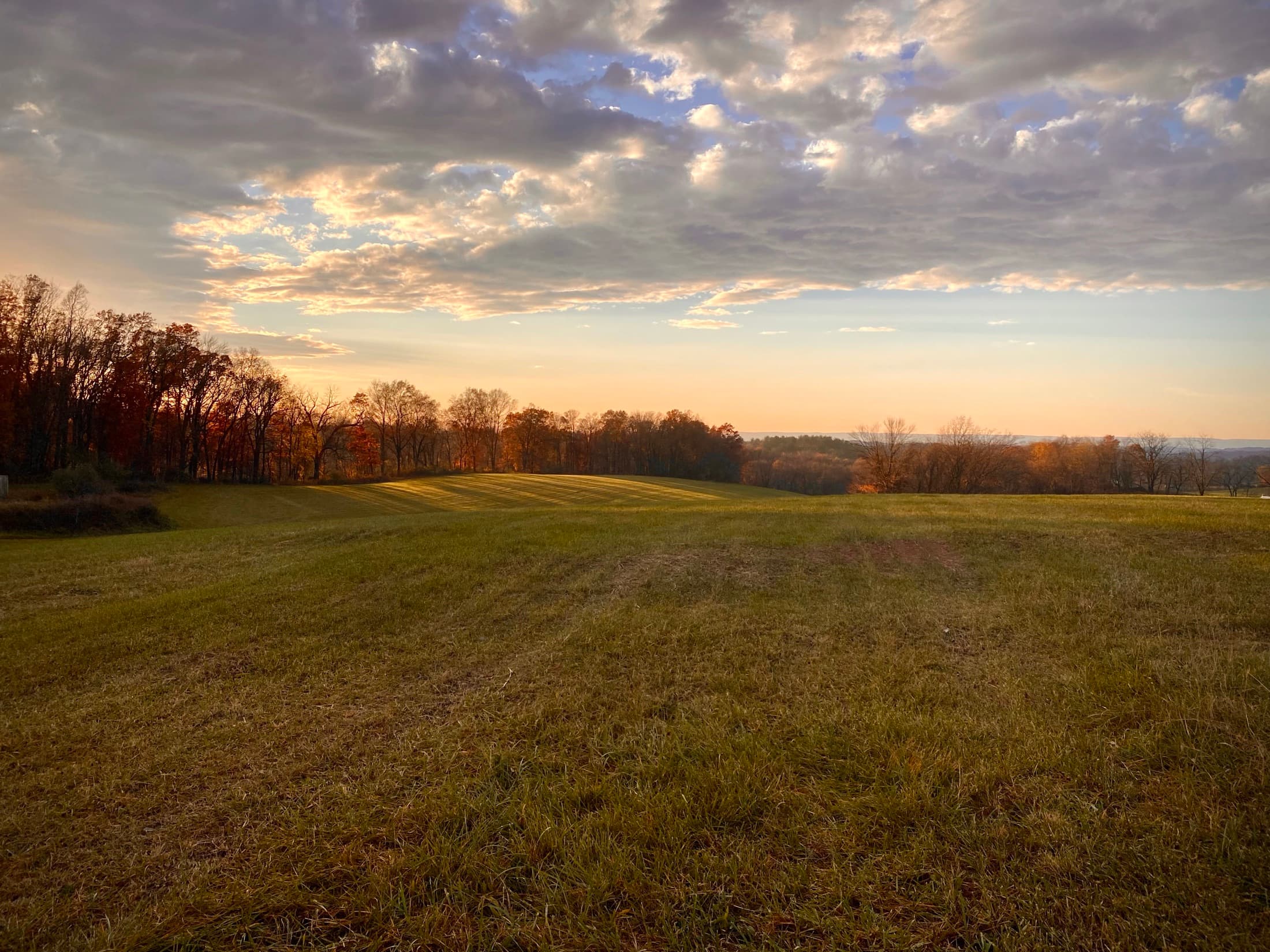
Create a dedicated place to sit and take in your property. It doesn't need to be elaborate. Just somewhere you can eat a meal, have a drink, take in a sunset, and be on the land without working it.
Farms can easily become all work if you let them. Dedicated time for enjoying the land keeps you grounded (literally).
You will make better decisions about your land when you spend time on it without an agenda.
This is also how you share it with family and friends who don't farm. Let them experience what you're building.
19.How to Think About All of It
A few things that show up in almost every new farmer's experience, regardless of scale or location:
- Don't buy before you understand. Borrow, rent, and observe first
- Water and access determine almost everything else. Get these right early.
- Small problems compound on a farm. A slow fence post, a small leak, a minor drainage issue all have consequences if you leave them through a full season.
- Simplicity in year one beats optimization. You're still learning what needs optimizing.
- Your land is both a production system and an experience, and both have value.
- Farming expands to fill all available time. Set some limits early.
- Years one through three are learning cycles. That's not failure, that's how this works.